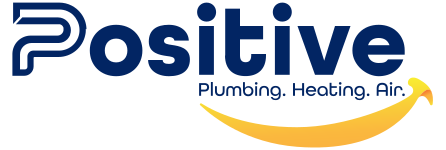


The Problem Reported by the Homeowner
The University Park homeowner experienced recurring drainage problems affecting the home’s wastewater system. Water was not draining as expected, raising concerns about a blockage or damage within the main sewer line.
Unlike a clog confined to a single sink or shower, a main sewer line problem can affect several plumbing fixtures because their individual drain lines eventually connect to the same wastewater pipe.
Our technician evaluated the affected drainage system to determine whether the problem could be resolved through drain cleaning or required a repair to the sewer piping itself.
Positive provides professional drain cleaning and sewer services in Irvine for recurring backups, clogged drains, and other drainage problems.
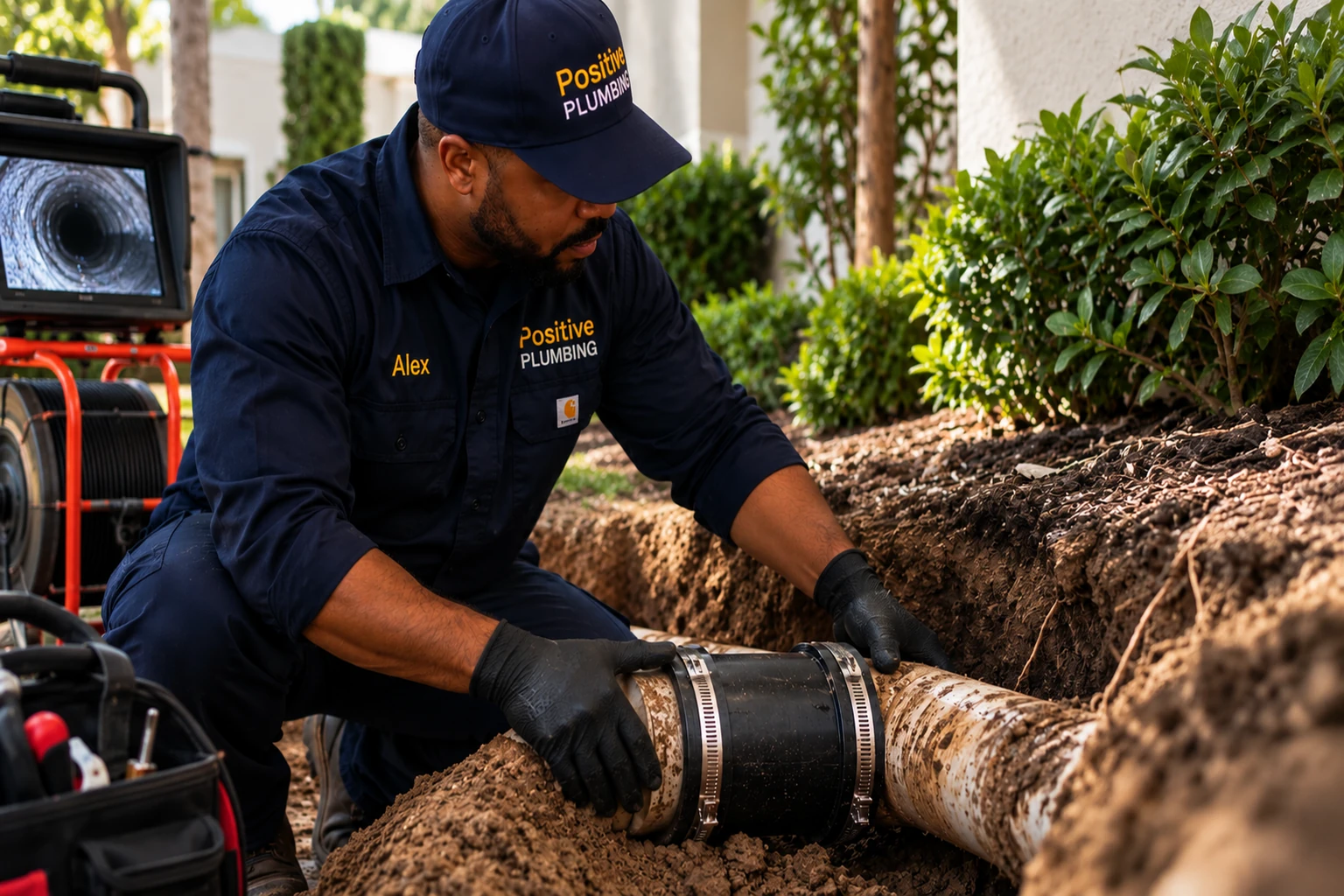
What Our Technician Found
The inspection identified a damaged section of the main sewer pipe that was interfering with normal wastewater flow.
A damaged pipe can create an uneven interior surface, a narrowed passage, or a displaced connection where waste and debris accumulate. Depending on the type of damage, the affected section may also allow wastewater to escape into the surrounding soil.
In this repair scenario, the condition of the affected pipe called for replacement of the damaged section rather than relying on drain cleaning alone.
Inspecting the Main Sewer Line
Before repairing a sewer line, a technician needs to identify the location of the problem and assess the condition of the surrounding piping.
A sewer camera inspection is one method used to examine the inside of a drain or sewer pipe. A camera inserted through an accessible cleanout can help reveal cracks, displaced joints, root intrusion, accumulated debris, or other visible conditions affecting drainage.
The inspection findings help determine whether the appropriate solution is drain cleaning, a localized pipe repair, or a more extensive sewer line replacement.
For the University Park repair scenario, the work was directed toward the damaged section of the sewer line while preserving the existing piping outside the repair area.
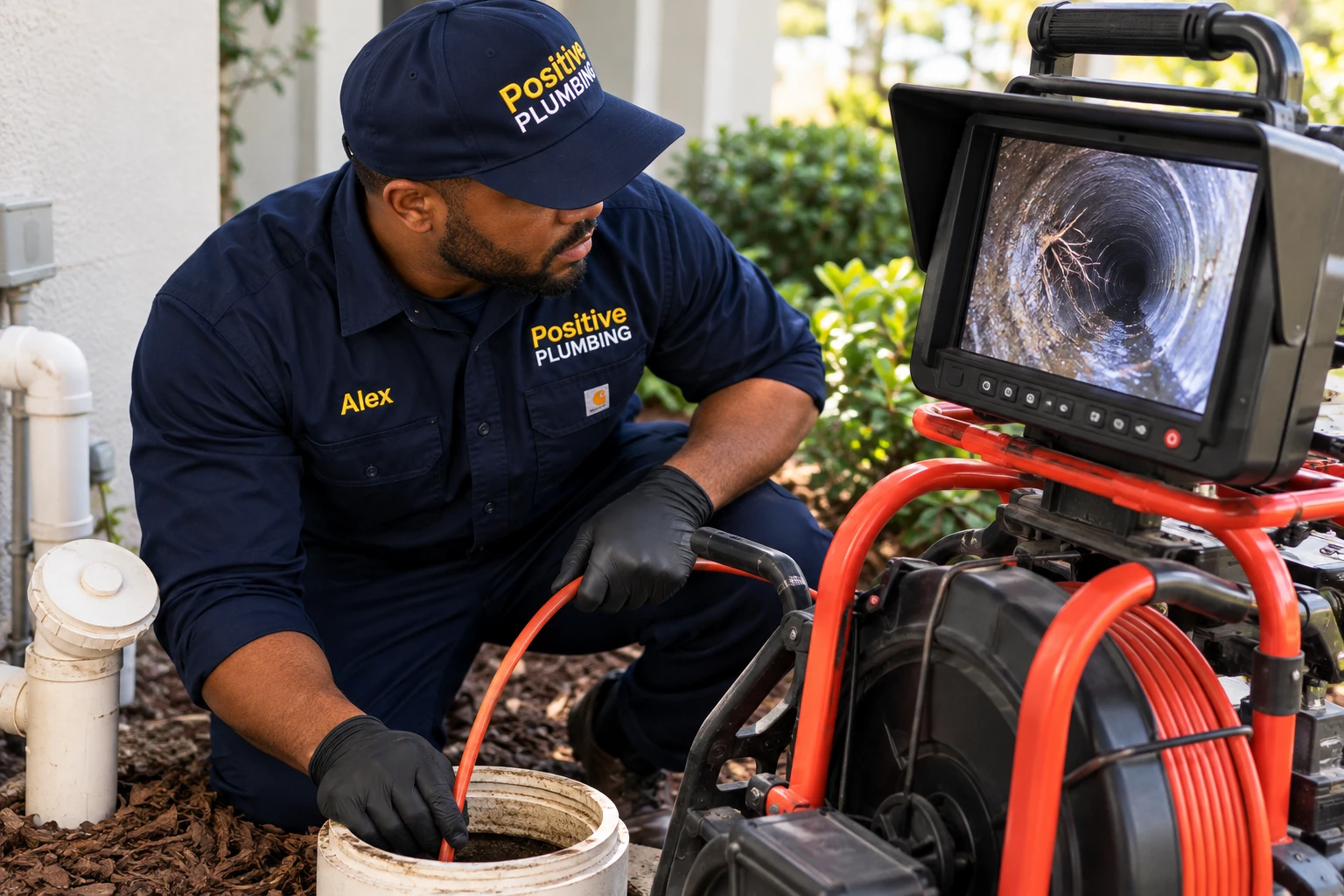
Completing the Sewer Line Repair
Once the affected section was identified, our technician accessed the damaged piping and prepared the sewer line for repair.
The compromised section was removed and replaced with new piping to restore a continuous passage for wastewater. The replacement pipe was connected to the existing sewer line, with attention to proper alignment and secure connections.
Correct pipe alignment is important because residential sewer systems generally rely on gravity to move wastewater away from the property. Improper slope or a poorly aligned connection can contribute to standing water, debris accumulation, and recurring blockages.
The localized repair addressed the damaged section without requiring replacement of the entire sewer line.
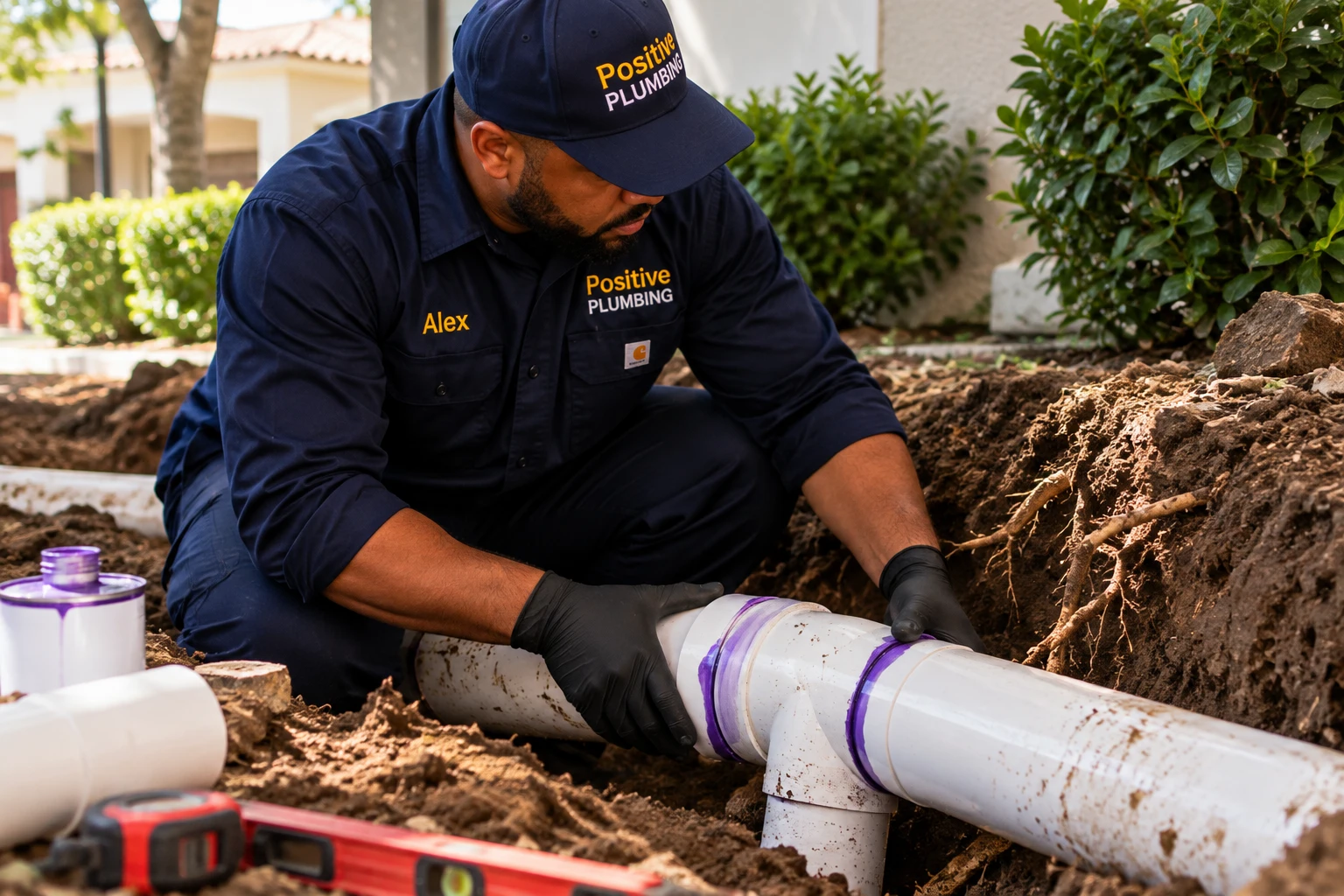
How We Completed the Pipe Replacement
The pipe replacement focused on restoring the structural condition and drainage function of the affected sewer line.
After removing the damaged section, our technician fitted the replacement piping to the existing line and completed the connections. The repaired section was then prepared for drainage testing.
The goal of a localized sewer repair is to restore a continuous, properly connected wastewater pipe while retaining the surrounding sections that remain suitable for use.
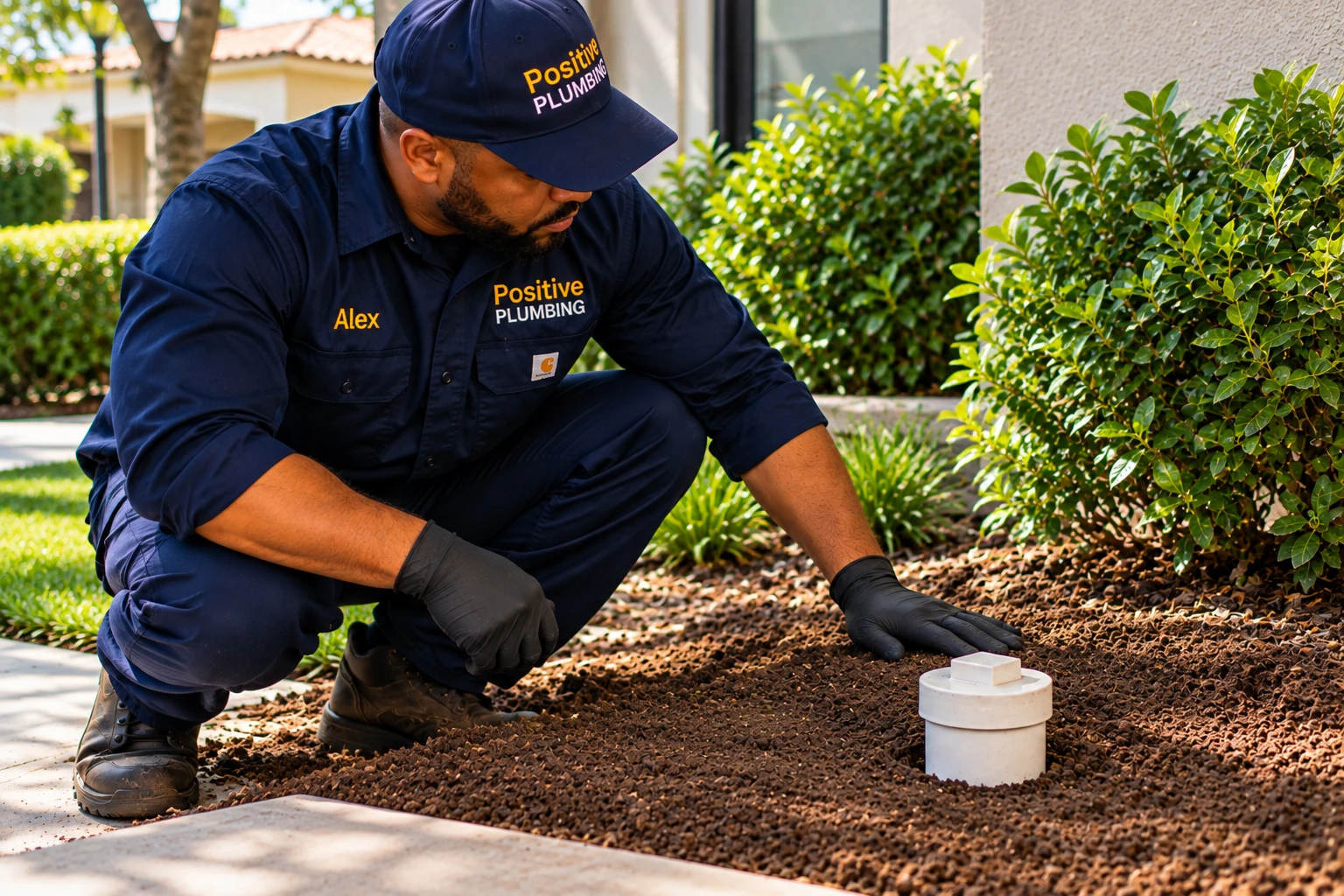
Testing the Repaired Sewer Line
After completing the pipe replacement, our technician checked the repaired drainage system to verify that wastewater could pass through the affected section.
Drainage testing is an important final step because a completed pipe connection must do more than hold the replacement section in place. The line must also allow wastewater to move through the system without backing up at the repair location.
The final checks focused on operating the repaired section and restoring normal drainage.
The Final Result
The sewer line repair restored the damaged section of piping and reestablished a continuous path for wastewater to leave the University Park property.
By addressing the pipe damage rather than repeatedly clearing the resulting drainage restriction, the repair corrected the affected section of the sewer system.
The completed work allowed the home’s drainage system to return to normal operation.
Common Causes of Residential Sewer Line Damage
Residential sewer pipes can deteriorate or become damaged for several reasons. Understanding the cause helps determine whether a localized repair, pipe lining, or sewer line replacement is appropriate.
Tree root intrusion: Roots can enter through existing cracks or loose pipe joints in search of moisture. As roots expand inside the line, they may restrict wastewater flow and contribute to additional pipe damage.
Aging or deteriorated piping: Older sewer lines may develop corrosion, cracks, weakened joints, or structural deterioration, depending on their material and condition.
Ground movement and settling: Changes in the surrounding soil can place stress on underground piping, potentially causing misaligned joints, cracks, or sections that no longer maintain the proper drainage slope.
Accumulated grease and debris: Grease, wipes, and other materials can build up inside a sewer pipe. Although buildup does not necessarily mean the pipe is damaged, recurring obstructions may warrant an inspection of the line’s condition.
A professional sewer inspection can help distinguish a removable blockage from a structural problem that requires pipe repair.
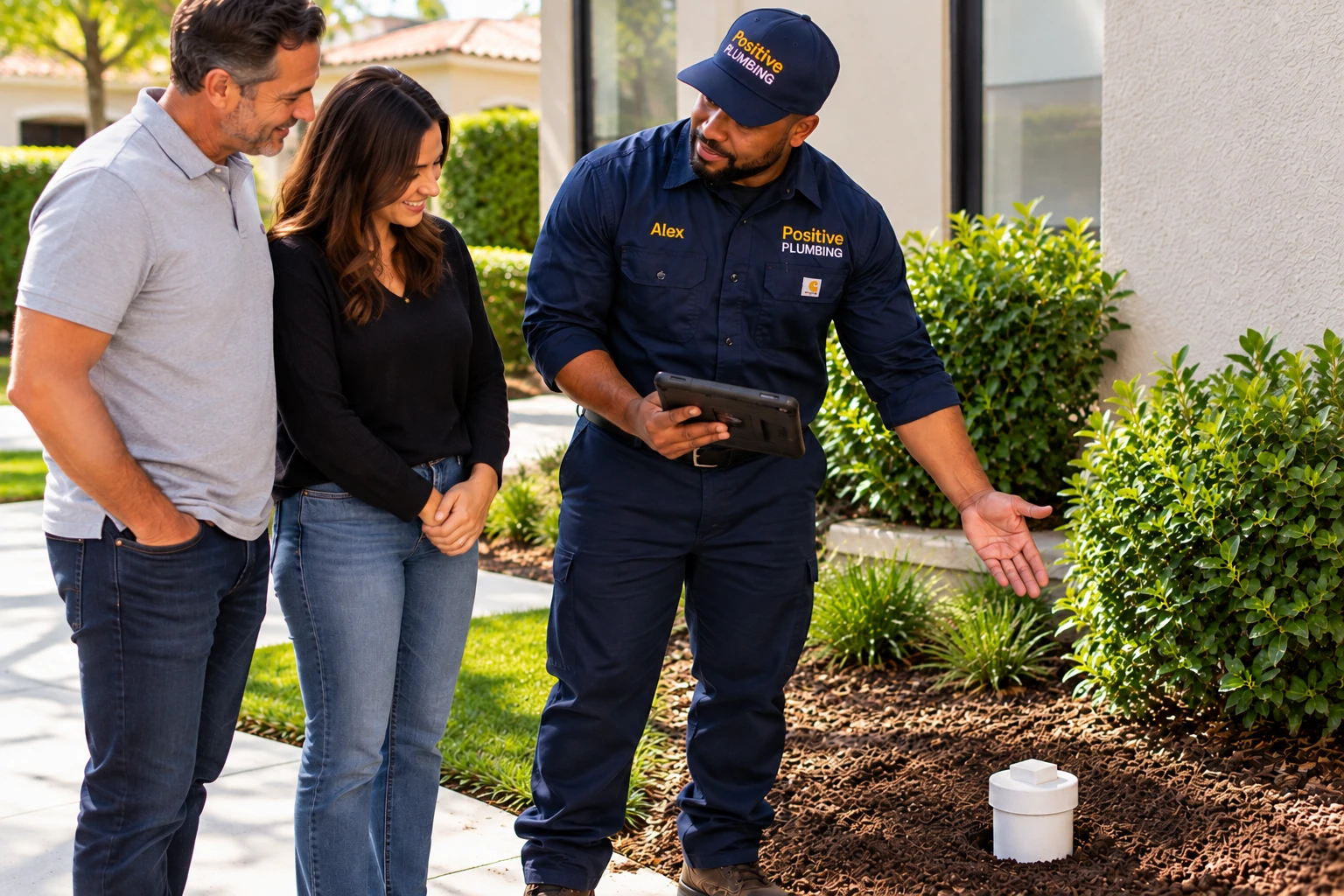
Sewer Camera Inspection and Sewer Cleanout Access
A sewer cleanout provides an access point for inspecting and servicing a home’s drainage system. Depending on the plumbing configuration, a technician may use an accessible cleanout to introduce a sewer camera or drain-cleaning equipment.
Camera inspections can help identify the location and visible condition of a problem inside the pipe. They are especially useful when homeowners experience recurring backups, multiple slow drains, or symptoms that return after cleaning.
A camera may reveal root intrusion, separated pipe joints, cracks, standing water, or a buildup of material restricting the line.
The results help guide the next step: removing an obstruction, repairing a damaged section, or evaluating whether a larger portion of the sewer line needs replacement.
Sewer Line Repair vs. Drain Cleaning
Drain cleaning and sewer line repair address different types of plumbing problems.
Drain cleaning removes obstructions that interfere with wastewater flow. Depending on the condition of the line and the type of blockage, a plumber may use a drain snake, mechanical cleaning equipment, or hydro jetting.
Hydro jetting uses high-pressure water to remove buildup from the interior of suitable drain and sewer pipes. It can be useful for clearing grease, sludge, and other accumulated debris, but it does not repair a cracked, broken, or displaced pipe.
When the sewer pipe itself is damaged, a repair may be needed to restore the line’s structure and drainage function. Cleaning can be part of the overall service when an obstruction is present, but it is not a substitute for correcting structural damage.
Localized Sewer Repair vs. Trenchless Sewer Line Replacement
The appropriate sewer repair method depends on the location and extent of the damage, pipe material, accessibility, and condition of the remaining sewer line.
Localized pipe repair addresses a specific damaged section. It may involve accessing the affected area, removing compromised piping, and installing a replacement section.
Trenchless sewer repair may be an option for certain pipe conditions and property layouts. Methods such as cured-in-place pipe lining create a new lining inside an existing pipe, while pipe bursting replaces an existing line by pulling new piping through its path.
Trenchless methods are not suitable for every sewer problem. A severely collapsed pipe, significant misalignment, or certain structural conditions may require a different repair approach.
A sewer line inspection helps determine the right method for the pipe’s condition.
Signs Your Main Sewer Line May Need Repair
A problem in the main sewer line can produce symptoms throughout the home’s plumbing system rather than at a single fixture.
Warning signs include recurring wastewater backups, multiple slow drains, gurgling toilets, sewer odors, or wastewater appearing in a shower or floor drain when another fixture is used.
An isolated slow sink may indicate a blockage in that fixture’s branch drain. However, when several fixtures experience drainage problems at the same time, the restriction may be farther downstream in a shared drain or the main sewer line.
Persistent symptoms should be evaluated before repeated backups lead to additional wastewater damage.
Preventing Recurring Sewer Backups
Homeowners can reduce avoidable sewer obstructions by keeping grease, cooking oil, wipes, paper towels, and other unsuitable materials out of the drainage system.
Routine drain maintenance can help address accumulating debris, while a sewer camera inspection may be useful when backups recur, or an older sewer line shows signs of deterioration.
Properties with trees near underground sewer piping may also benefit from evaluation when root intrusion is suspected.
Maintenance can help keep a functioning sewer line clear, but cracked or damaged piping requires an appropriate repair to address the underlying structural problem.
Sewer Line Repair and Plumbing Services in Irvine
Positive Plumbing, Heating & AC Repair provides plumbing, heating & AC services in Irvine for homeowners in University Park and surrounding neighborhoods.
Our plumbing services include drain cleaning, sewer line inspections, sewer pipe repair, wastewater backup diagnosis, and residential plumbing repairs.
Whether the problem involves a localized obstruction or damaged underground piping, a professional evaluation can help determine the appropriate service for restoring drainage.
Frequently Asked Questions About This Sewer Line Repair Project
What are the signs of a broken sewer line?
Common signs include recurring drain backups, multiple slow drains, sewer odors, gurgling plumbing fixtures, and wastewater backing up through lower-level drains. The symptoms depend on the location and severity of the damage.
Can a damaged sewer line be repaired without replacing the entire pipe?
Yes. If damage is limited to one section and the surrounding piping remains in suitable condition, a localized sewer pipe repair may be possible.
Will hydro jetting fix a broken sewer pipe?
No. Hydro jetting removes certain types of buildup and obstructions from suitable pipes, but it does not repair cracks, separated joints, or collapsed piping. The condition of the sewer line should be evaluated before selecting a cleaning method.
What is the purpose of a sewer camera inspection?
A sewer camera allows a technician to examine visible conditions inside the pipe and help locate obstructions, root intrusion, cracks, displaced joints, or other drainage problems.
Is trenchless sewer repair always possible?
No. Trenchless repair depends on the condition, layout, and accessibility of the existing sewer line. Some damaged or collapsed pipes require conventional excavation or another repair method.
Why do my drains keep backing up after cleaning?
Recurring backups can result from a persistent obstruction, root intrusion, improper pipe slope, or structural damage. A sewer line inspection can help determine why the problem continues.
Does Positive provide sewer line repair in University Park?
Yes. Positive Plumbing, Heating & AC Repair provides sewer line diagnosis, drain cleaning, and sewer pipe repair services in University Park and throughout Irvine.