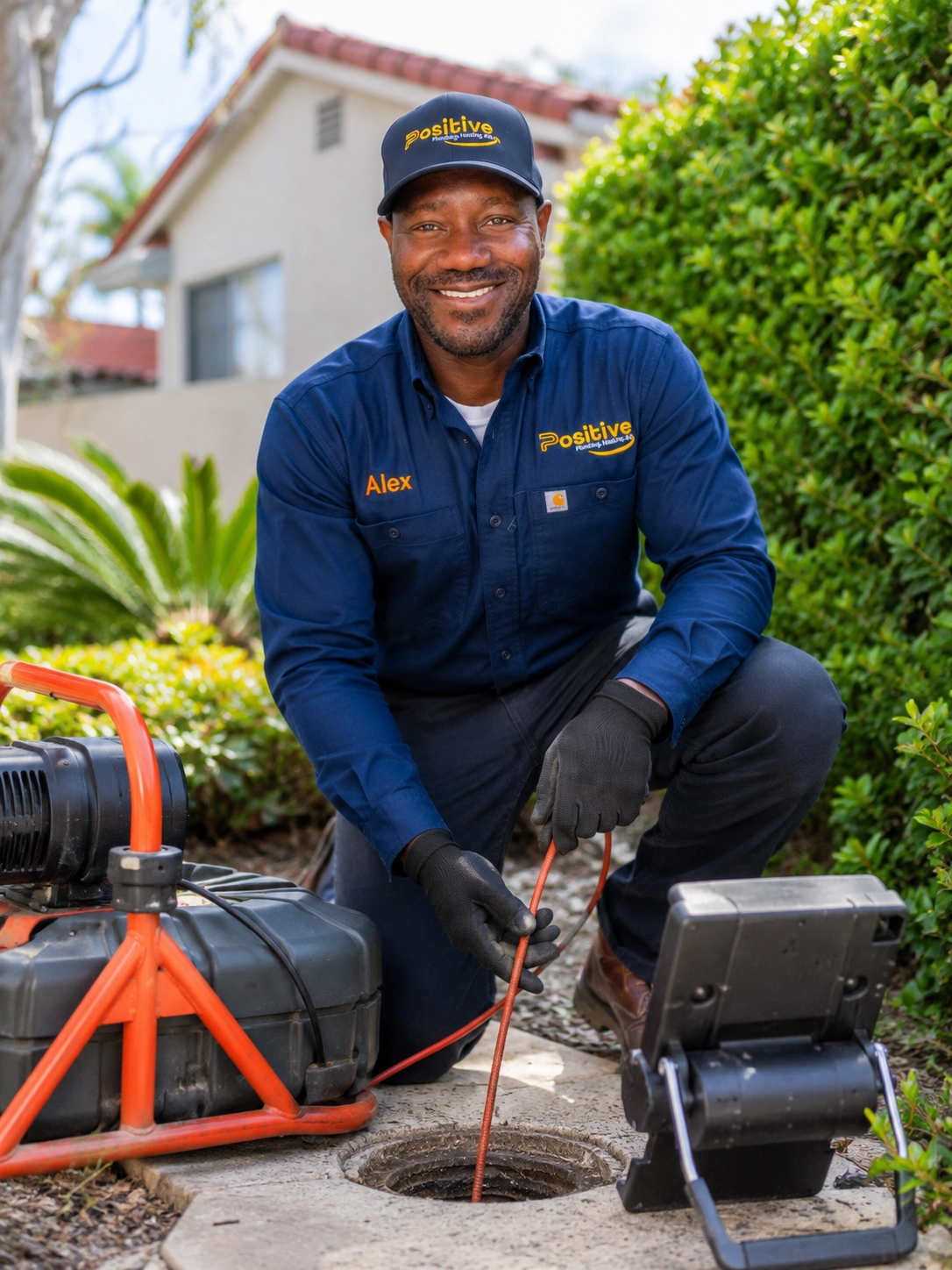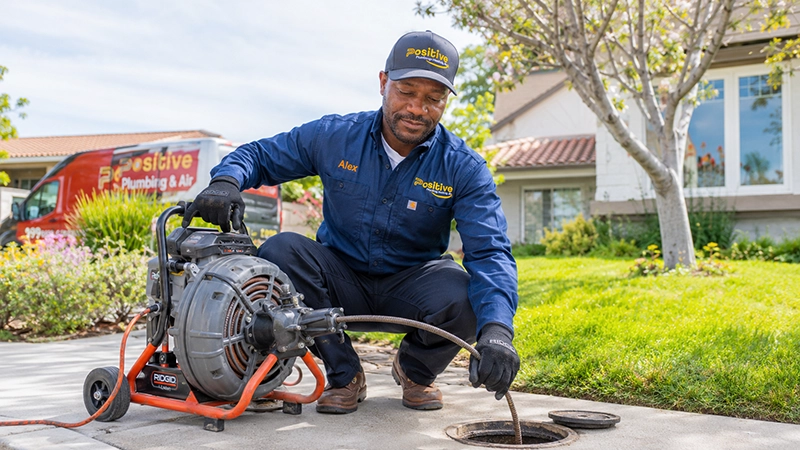

Recurring backups, multiple slow drains, gurgling toilets, and sewage returning through lower fixtures may indicate a blockage in your main sewer line. Positive Plumbing, Heating & AC provides professional sewer cleaning services for homes, businesses, and managed properties throughout Orange County.
Our technicians evaluate the symptoms, locate the appropriate sewer access point, and recommend the cleaning method best suited to the blockage and condition of the line.
Residential & Commercial Service • Main Sewer Line Cleaning • Clear Recommendations
Recurring backups, multiple slow drains, gurgling toilets, and sewage returning through lower fixtures may indicate a blockage in your main sewer line. Positive Plumbing, Heating & AC provides professional sewer cleaning services for homes, businesses, and managed properties throughout Orange County.
Our technicians evaluate the symptoms, locate the appropriate sewer access point, and recommend the cleaning method best suited to the blockage and condition of the line.
Residential & Commercial Service • Main Sewer Line Cleaning • Clear Recommendations


A blockage in the main sewer line can affect several fixtures at once and may lead to recurring backups, unpleasant odors, or wastewater returning through lower drains. Positive Plumbing, Heating & AC provides professional sewer cleaning services for residential, commercial, and managed properties throughout Orange County. Our technicians evaluate the symptoms, inspect the available access points, and recommend the appropriate cleaning method based on the location and severity of the obstruction.
We evaluate the affected fixtures, backup patterns, and available sewer access points to determine whether the problem is likely located in the main sewer line.
Our technicians use professional equipment selected for the type of blockage, sewer-line access, pipe size, and overall system condition.
The appropriate cleaning method may depend on whether the restriction involves roots, grease, sludge, scale, wipes, or another obstruction inside the sewer line.
We explain what we find, what service may be appropriate, and whether additional inspection or repair should be considered when recurring or structural problems are suspected.
A slow or backed-up fixture does not always mean the main sewer line is blocked. The location and number of affected fixtures can help indicate whether the problem involves an individual drain or the larger sewer line serving the property.
The problem may be limited to a branch drain when:
The problem may involve the main sewer line when:
Because individual drains and main sewer lines can produce similar symptoms, a professional evaluation can help identify where the restriction is located and which service is appropriate.
Sewer-line problems often begin with small changes in how fixtures drain before developing into a larger backup. Recognizing the warning signs early can help reduce the risk of wastewater damage, unpleasant odors, and repeated plumbing disruptions.
Positive Plumbing, Heating & AC evaluates the affected fixtures, backup patterns, and available sewer access points to help determine whether professional sewer cleaning may be appropriate.
Several sinks, showers, tubs, or floor drains begin draining more slowly at the same time.
The problem improves temporarily after service but returns and affects more than one area of the property.
Toilets make bubbling or gurgling sounds when another fixture, appliance, or plumbing system is used.
Wastewater or standing water returns through a shower, bathtub, floor drain, or another low plumbing fixture.
Persistent sewage odors appear near multiple drains, bathrooms, exterior cleanouts, or other areas of the property.
Water or waste appears around an exterior sewer cleanout, especially when toilets, showers, or appliances are used.
Problems become more noticeable when several fixtures are used at once, laundry is running, or large amounts of water enter the system.
Individual drains require repeated cleaning because the underlying restriction may be located farther downstream in the main sewer line.
One warning sign does not always confirm a main sewer-line blockage. However, when several fixtures are affected or the problem continues returning, a professional evaluation can help identify where the restriction is located and whether sewer cleaning, camera inspection, or another service should be considered.
Main sewer-line blockages can develop gradually as grease, roots, scale, wipes, and other materials restrict the pipe. In other cases, the problem may involve damaged, misaligned, or deteriorated sewer piping. Identifying the likely cause helps determine whether the line may benefit from mechanical cleaning, hydro jetting, camera inspection, or additional evaluation.
Tree roots can enter through cracks, loose joints, or damaged sections of a sewer line. Once inside, they may trap waste and other materials, leading to recurring restrictions or backups.
Grease and cooking oils can cool and harden inside sewer piping. Over time, they may collect food particles and other debris, gradually reducing the available space for wastewater to flow.
Wipes, hygiene products, paper towels, excessive toilet paper, and other materials may become lodged inside the sewer line. Products labeled “flushable” may still contribute to blockages because they do not always break down quickly.
Minerals and other deposits can accumulate along the inner walls of older sewer pipes. This buildup can narrow the pipe opening, slow wastewater flow, and create surfaces where additional debris becomes trapped.
A low section, separated joint, crack, or misaligned connection can interrupt proper flow and create an area where waste repeatedly collects. Cleaning may restore temporary flow, but structural damage may require further evaluation.
Sewer lines installed with insufficient slope, poor connections, or other installation defects may not move wastewater efficiently. These conditions can contribute to recurring buildup and repeated blockages.
Some sewer obstructions can be removed through professional cleaning, while others may continue returning because of structural pipe conditions. When the cause is unclear or the blockage is recurring, a sewer camera inspection may help identify what is happening inside the line.
A sewer backup can expose your property to contaminated wastewater and may become worse when additional water enters the plumbing system. Taking a few immediate precautions can help limit damage and reduce unnecessary exposure while you arrange professional service.
Avoid running sinks, showers, dishwashers, washing machines, or other water-using fixtures until the sewer problem has been evaluated.
Flushing may send additional wastewater into a restricted sewer line and cause more water to return through lower fixtures.
Restrict access to affected bathrooms, floor drains, yards, or other areas where wastewater has surfaced.
Do not touch sewage with bare skin. Contaminated water may contain bacteria and other harmful materials.
Chemical products are unlikely to resolve a main sewer-line blockage and may create additional hazards for anyone servicing the line.
Explain which fixtures are affected, where wastewater is appearing, and whether the problem occurs after heavy water use.
Chemical products are unlikely to resolve a main sewer-line blockage and may create additional hazards for anyone servicing the line.
Once the immediate backup is controlled, professional evaluation can help determine whether the problem involves a removable obstruction, recurring root intrusion, heavy buildup, or damage inside the sewer line.
Every sewer blockage is different. The appropriate service depends on which fixtures are affected, where the restriction is located, how the sewer line can be accessed, and whether the problem appears to involve buildup, roots, foreign material, or damaged piping. Our technicians follow a clear process to evaluate the problem, recommend the appropriate service, and confirm that wastewater is flowing properly before the work is completed.
We ask when the problem began, which fixtures are affected, whether the backup is recurring, and where wastewater or odors have appeared.
The technician reviews the affected fixtures, nearby plumbing, exterior conditions, and any visible signs of backup or sewer-line restriction.
Depending on the property, access may be available through an exterior cleanout, another approved access point, or a location identified during the evaluation.
We use the symptoms, property layout, access point, and system behavior to estimate where the restriction may be located and what may be causing it.
The technician uses the cleaning method and equipment appropriate for the suspected obstruction, pipe size, access conditions, and overall sewer-line condition.
After cleaning, we test the affected fixtures and sewer flow, explain what was found, and discuss whether camera inspection, maintenance, or repair should be considered.
When the blockage is cleared successfully, normal wastewater flow may be restored. If the restriction returns quickly or the line shows signs of damage, additional inspection may be recommended to identify the underlying cause.
The right sewer-cleaning method depends on the type of obstruction, the size and condition of the pipe, the available access point, and whether the problem appears to involve roots, grease, scale, wipes, or another restriction. After evaluating the symptoms and sewer access, our technicians recommend the method best suited to the condition of the line.
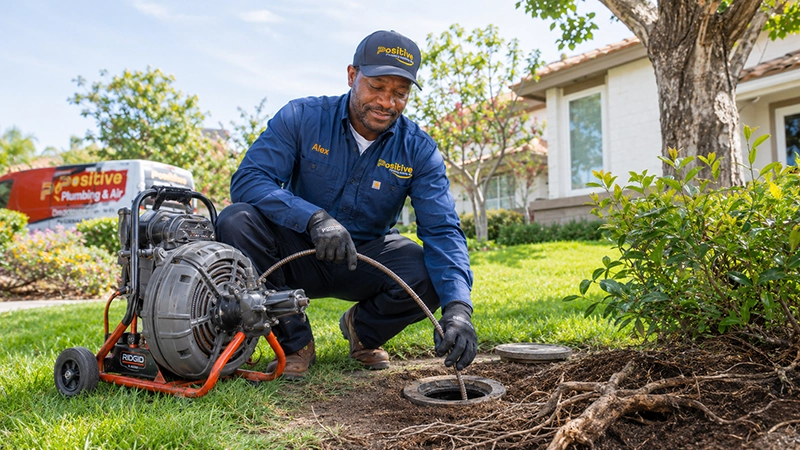
Mechanical sewer cabling uses a rotating cable with specialized attachments to break through, loosen, or retrieve certain obstructions inside the sewer line. The equipment selected depends on the pipe size, access point, and suspected blockage.
May be appropriate for:
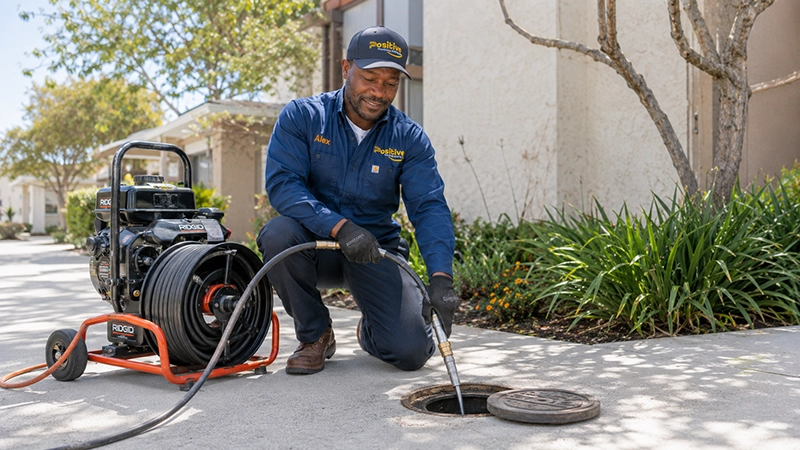
Hydro jetting uses controlled high-pressure water to remove grease, sludge, scale, and accumulated debris from the interior of a sewer line. It can clean a broader portion of the pipe than methods focused only on opening the blockage.
May be appropriate for:
Root-cutting equipment uses specialized rotating attachments to cut through accessible tree roots growing inside the sewer line. This service may restore flow, but it does not repair the damaged joint or pipe opening where the roots entered.
May be appropriate for:
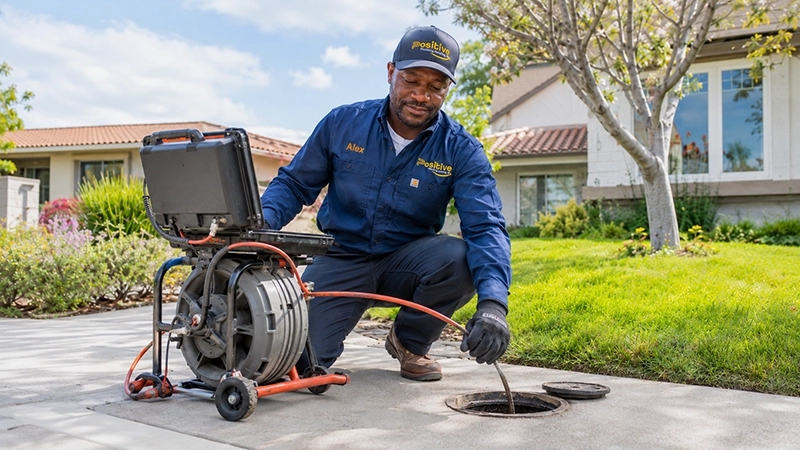
A sewer camera inspection uses a specialized video camera to examine accessible sections inside the sewer line. It may be recommended when the cause is unclear, the blockage continues returning, or damage is suspected.
May help identify:
The correct drain-cleaning method depends on the type of blockage, its location, the condition of the pipe, and whether the problem is isolated or recurring. Positive Plumbing evaluates these factors before recommending service, helping customers avoid unnecessary treatments and repeated temporary fixes.
Main sewer-line blockages can affect many types of properties, from single-family homes to restaurants, apartment communities, and commercial buildings. Positive Plumbing, Heating & AC provides professional sewer cleaning based on the property type, sewer access, line size, blockage severity, and operating needs of the building.
We provide sewer cleaning for single-family homes, townhomes, and condominiums experiencing recurring backups, multiple slow drains, gurgling toilets, or restricted main sewer flow.
Commercial sewer systems may experience heavier use, grease accumulation, foreign materials, and recurring restrictions. We provide cleaning recommendations based on the building and sewer-line conditions.
When backups continue returning, professional cleaning may help remove roots, grease, sludge, wipes, or other obstructions restricting flow through the main sewer line.
Specialized sewer-cleaning equipment may be used to remove accessible root intrusion, grease, mineral scale, sludge, and accumulated debris from inside the line.
Scheduled sewer cleaning may help reduce recurring buildup in properties with heavy plumbing use, known grease problems, previous root intrusion, or repeated blockages.
We provide sewer cleaning for apartment buildings, HOA communities, rental properties, and professionally managed properties requiring coordinated access and clear service recommendations.
Homes • Condominiums • Apartment Buildings • Restaurants • Offices • Retail Properties • HOA Communities
The right sewer-cleaning approach depends on how the property is used, where the line can be accessed, and what appears to be causing the restriction. Our technicians evaluate the conditions before recommending service.
The cost of professional sewer cleaning in Orange County depends on the location and severity of the blockage, the available access point, the cleaning method required, and the condition of the sewer line.
A technician must evaluate the system before providing an accurate recommendation because a localized obstruction, heavy grease buildup, root intrusion, and a damaged sewer line may require very different services.
Restrictions located near an accessible cleanout may be easier to reach than blockages deeper inside the main sewer line.
A properly located exterior cleanout can simplify access. Limited or difficult access may require additional time or evaluation.
Longer sewer runs and larger commercial lines may require different equipment, setup, and service time.
A partial restriction may require less work than a complete blockage involving compacted debris, roots, grease, or foreign material.
Mechanical cabling, hydro jetting, root cutting, and other cleaning methods involve different equipment and service requirements.
Tree roots, mineral scale, grease, sludge, and years of accumulated material may require more extensive cleaning.
Older, corroded, cracked, offset, or fragile piping may require additional care and could affect which cleaning methods are appropriate.
Commercial and multifamily sewer systems may have larger lines, heavier usage, more complex access, or scheduling requirements.
A camera inspection may be recommended when the blockage is recurring, the cause is unclear, or structural damage is suspected.
Emergency, after-hours, or urgent scheduling may affect service availability and pricing when those options are offered.
What May Not Be Included in a Low Sewer-Cleaning Price
A very low advertised price may apply only to limited conditions or basic service. Before scheduling, ask what the offer includes and whether additional charges may apply for:
The most useful estimate is based on the actual blockage, sewer access, pipe condition, and service required. Positive Plumbing, Heating & AC explains the recommended work before proceeding so property owners can make an informed decision.
Professional sewer cleaning can remove many obstructions and restore wastewater flow. However, cleaning cannot repair cracks, separated joints, collapsed sections, improper slope, or other structural problems inside the sewer line. When blockages return quickly or the line continues performing poorly after cleaning, a sewer camera inspection may be recommended to help identify the underlying condition.
The sewer line backs up again shortly after cleaning or requires service more often than expected.
Tree roots continue entering the same area because the crack, loose joint, or damaged pipe section has not been repaired.
Wastewater continues moving slowly even after accessible buildup or obstructions have been removed.
Several drains, toilets, or lower fixtures continue showing symptoms after the initial blockage is cleared.
Persistent sewer odors may indicate trapped waste, damaged piping, poor venting, or another unresolved plumbing condition.
Inspection reveals cracks, offsets, low sections, corrosion, collapse, or other conditions that cleaning cannot correct.
Cleaning may remove an obstruction, but it cannot seal cracks or repair broken sections that allow roots, soil, or groundwater to enter.
Misaligned or separated pipe connections can interrupt flow and create edges where waste repeatedly collects.
A low section of pipe may hold water and waste instead of allowing proper gravity flow through the sewer system.
A partially or fully collapsed sewer line may restrict or stop wastewater flow and generally requires repair or replacement.
Older metal or deteriorated piping may have narrowed interiors, weak walls, holes, or rough surfaces that encourage recurring buildup.
Incorrect slope, poor connections, unsuitable materials, or installation defects may cause repeated flow and blockage problems.
When structural damage is suspected, the next step may involve sewer camera inspection, localized sewer-line repair, or replacement of the affected section. The appropriate recommendation should be based on the actual pipe condition, not merely on how often the line has been cleaned.
Not every sewer problem requires the same solution. Some sewer lines need professional cleaning to remove buildup or obstructions, while others may require repair or replacement when the pipe itself is damaged. The right recommendation depends on the blockage, pipe condition, access point, inspection findings, and whether the problem keeps returning.
Sewer cleaning is used when the main sewer line is restricted by buildup or removable obstructions. This may include grease, sludge, wipes, tree roots, scale, or other material affecting wastewater flow.
May be recommended when:
Sewer-line replacement may be considered when the pipe has widespread damage, severe deterioration, repeated failures, or conditions that cannot be corrected with cleaning or isolated repair.
May be recommended when:
Sewer-line replacement may be considered when the pipe has widespread damage, severe deterioration, repeated failures, or conditions that cannot be corrected with cleaning or isolated repair.
May be recommended when:
A professional sewer evaluation can help determine whether the problem can be handled with cleaning or whether pipe damage should be inspected further. Positive Plumbing, Heating & AC explains the findings and service options clearly before recommending the next step.
Some sewer-line blockages happen suddenly, but many recurring problems are caused by materials that build up over time. While not every sewer issue can be prevented, especially when damaged piping or root intrusion is involved, good plumbing habits can help reduce avoidable restrictions. Positive Plumbing, Heating & AC can also recommend whether preventive sewer cleaning or camera inspection may be helpful when backups keep returning.
Grease, fats, and oils can cool inside sewer piping and collect debris, gradually narrowing the line.
Wipes, hygiene products, paper towels, and other materials can contribute to main sewer-line blockages.
Even products labeled flushable may not break down quickly enough to move safely through the sewer system.
Strainers can help reduce food scraps, hair, and other debris that may contribute to buildup over time.
Paint, grout, drywall compound, dirt, and construction debris should never be rinsed into drains.
Multiple slow drains, gurgling toilets, sewage odors, or recurring backups should be addressed early.
If roots keep returning, cleaning may restore flow temporarily, but the pipe entry point may need inspection.
Restaurants, multifamily buildings, and high-use properties may benefit from scheduled sewer maintenance.
If backups keep coming back, a sewer camera inspection may help identify roots, damage, buildup, or low sections.
Preventive habits can reduce some sewer-line problems, but recurring backups should not be ignored. When the same sewer issue keeps returning, professional evaluation can help determine whether the line needs cleaning, inspection, repair, or replacement.
Sewer cleaning can help restore wastewater flow when the main sewer line is restricted by buildup, roots, grease, wipes, sludge, or other obstructions. Understanding the warning signs and service options can help property owners respond before a small restriction becomes a larger backup.
If several fixtures are affected, the sewer line backs up repeatedly, or wastewater returns through lower drains, professional sewer evaluation can help determine whether cleaning, inspection, repair, or replacement should be considered.
Sewer problems can be stressful, especially when multiple fixtures are affected or wastewater is backing up into the property. Positive Plumbing, Heating & AC helps Orange County homeowners, business owners, and property managers understand what is happening and what service may be appropriate. Our technicians provide clear communication, professional sewer-cleaning equipment, and practical recommendations based on the condition of the line.
Our technicians understand how to evaluate sewer-line symptoms, access points, backup patterns, and common causes of main-line restrictions.
We explain what we find, what service may be recommended, and when additional inspection may be needed for recurring or structural problems.
We use equipment selected for the blockage type, pipe size, access point, and sewer-line condition rather than treating every problem the same way.
Our team works carefully around homes, businesses, landscaping, cleanouts, fixtures, and affected areas during sewer-cleaning service.
We recommend cleaning, inspection, repair, or replacement based on the actual condition of the sewer line and the symptoms present.
We provide sewer-cleaning service for homes, townhomes, commercial buildings, restaurants, multifamily properties, and managed communities.
Whether the issue involves a first-time sewer backup or a problem that keeps returning, our goal is to restore proper flow and help you understand the next best step for your property.
Sewer-line problems can affect daily routines, business operations, and property safety. Here are examples of the types of sewer cleaning issues Orange County customers may contact Positive Plumbing, Heating & AC for.
We had several drains slowing down at the same time and one bathroom started backing up. Positive Plumbing came out, checked the sewer access, explained what was likely happening, and cleared the main line. The technician was professional and made sure everything was draining properly before leaving.
Our sewer line kept backing up every few months and we needed someone to explain why it was happening. Positive Plumbing cleaned the line and recommended a camera inspection because the problem had returned more than once. I appreciated that they explained the options clearly instead of just rushing through the job.
We had a sewer issue affecting our business and needed help quickly. Positive Plumbing showed up prepared, located the access point, and handled the sewer cleaning with minimal disruption. The technician communicated clearly throughout the service and gave us practical maintenance advice.
⭐ 4.9 out of 5 stars from 150+ verified homeowners on Google
Positive Plumbing, Heating & AC provides professional sewer cleaning services for homes, businesses, restaurants, multifamily buildings, and managed properties throughout Orange County.
Whether the issue involves a main sewer-line blockage, recurring backups, tree-root intrusion, grease buildup, or wastewater returning through lower fixtures, our technicians evaluate the property and recommend the appropriate sewer-cleaning service.
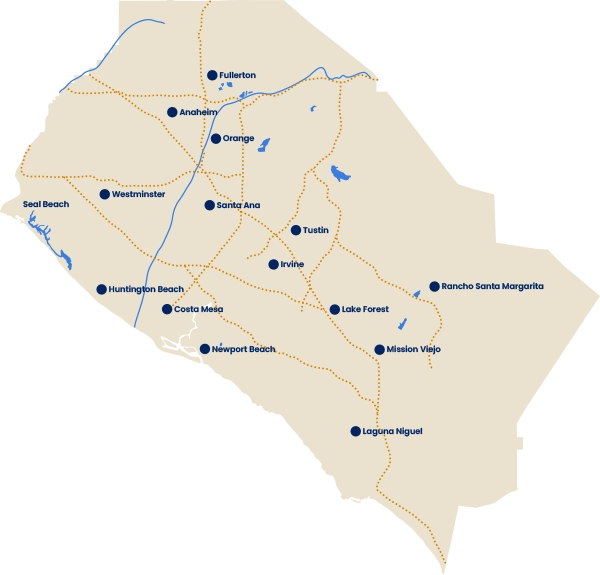
We serve residential and commercial customers throughout Orange County, including:
Sewer-line access, pipe materials, property age, tree-root conditions, and plumbing layouts can vary across Orange County neighborhoods. Our technicians consider the property type, symptoms, cleanout access, and sewer-line condition before recommending service.
Main sewer-line problems can create similar symptoms even when the underlying cause is different. These answers explain common warning signs, cleaning methods, service expectations, and when additional inspection may be recommended.
A main sewer-line blockage may affect several fixtures at the same time. Common signs include multiple slow drains, toilets bubbling when other fixtures are used, wastewater returning through lower drains, recurring backups, and sewage odors in more than one area.
An isolated slow sink or shower is more likely to involve an individual drain, although a professional evaluation may be needed when the symptoms are unclear.
Drain cleaning typically addresses a blockage affecting one fixture or branch drain, such as a kitchen sink, shower, bathtub, or bathroom sink.
Sewer cleaning focuses on the larger main sewer line that carries wastewater away from the property. A sewer-line blockage may affect several fixtures throughout the home or building.
Sewer-cleaning cost depends on the blockage location, cleanout access, pipe length and diameter, obstruction severity, cleaning method, pipe condition, and whether camera inspection is needed.
An accurate recommendation usually requires evaluating the property and sewer system rather than relying on a single advertised price.
Specialized root-cutting equipment may remove accessible tree roots from inside the sewer line and help restore flow.
However, root cutting does not repair the crack, loose joint, or damaged section where the roots entered. Recurring root intrusion may require camera inspection and possible sewer-line repair.
Mechanical sewer cabling uses a rotating cable and specialized attachments to break through or retrieve certain obstructions.
Hydro jetting uses controlled high-pressure water to clean grease, sludge, scale, and accumulated material from a broader portion of the pipe. The appropriate method depends on the blockage and pipe condition.
A sewer camera inspection may be recommended when the blockage keeps returning, the cause is unclear, roots are suspected, or structural pipe damage may be present.
Not every sewer-cleaning service requires camera inspection. The recommendation should be based on the symptoms and sewer-line conditions.
Hydro jetting may not be appropriate for every sewer line. Older, fragile, severely corroded, cracked, or damaged piping should be evaluated before high-pressure cleaning is recommended.
The technician should consider the pipe material, age, condition, and previous problems before selecting a cleaning method.
Toilet bubbling may occur when wastewater or air cannot move freely through the sewer system. A restriction farther downstream can force air back through the toilet when a sink, shower, washing machine, or other fixture is used.
When several fixtures are involved, the main sewer line may need evaluation.
Showers, tubs, and floor drains are often among the lowest plumbing openings in a property. When the main sewer line is restricted, wastewater may return through these lower fixtures instead of flowing away from the building.
Stop using water and arrange professional service when sewage is backing up.
Service time depends on the blockage location, line length, access point, obstruction type, cleaning method, and whether additional inspection is required.
A straightforward accessible blockage may take less time than a long sewer line with roots, heavy buildup, or difficult cleanout access.
Sewer cleaning may remove roots, grease, sludge, wipes, or other obstructions causing recurring backups.
However, if the problem returns because of cracks, offsets, sagging pipe, collapse, or improper slope, cleaning may provide only temporary relief. Camera inspection may help identify the underlying cause.
There is no single schedule for every commercial property. Restaurants, multifamily buildings, and high-use facilities may need more frequent preventive cleaning than lower-use properties.
The appropriate schedule depends on grease exposure, occupancy, previous blockages, pipe condition, and operating history.
Positive Plumbing, Heating & AC provides sewer-cleaning services for homes, townhomes, condominiums, commercial buildings, restaurants, multifamily properties, and managed communities throughout Orange County.
The equipment and service approach may vary depending on the property and sewer system.
Repair or replacement may be considered when the sewer line has cracks, separated joints, offset connections, severe corrosion, bellied sections, collapse, or repeated failures.
Cleaning removes obstructions but cannot correct structural pipe damage.
Stop using water throughout the property, avoid flushing toilets, keep people and pets away from wastewater, and do not add chemical drain cleaners.
Tell the technician where the backup is occurring, which fixtures are affected, and whether any products have already been poured into the system.
These answers provide general guidance, but the correct sewer service depends on the actual symptoms, access point, blockage, and pipe condition. A professional evaluation can help determine whether cleaning, camera inspection, repair, or replacement should be considered.
Recurring sewer backups, multiple slow drains, gurgling toilets, sewage odors, and wastewater returning through lower fixtures may indicate a restriction in the main sewer line.
Positive Plumbing, Heating & AC provides professional sewer cleaning for residential, commercial, multifamily, and managed properties throughout Orange County. Our technicians evaluate the symptoms, identify the available sewer access point, and recommend the appropriate cleaning or inspection service based on the condition of the line.
Same-Day Service May Be Available