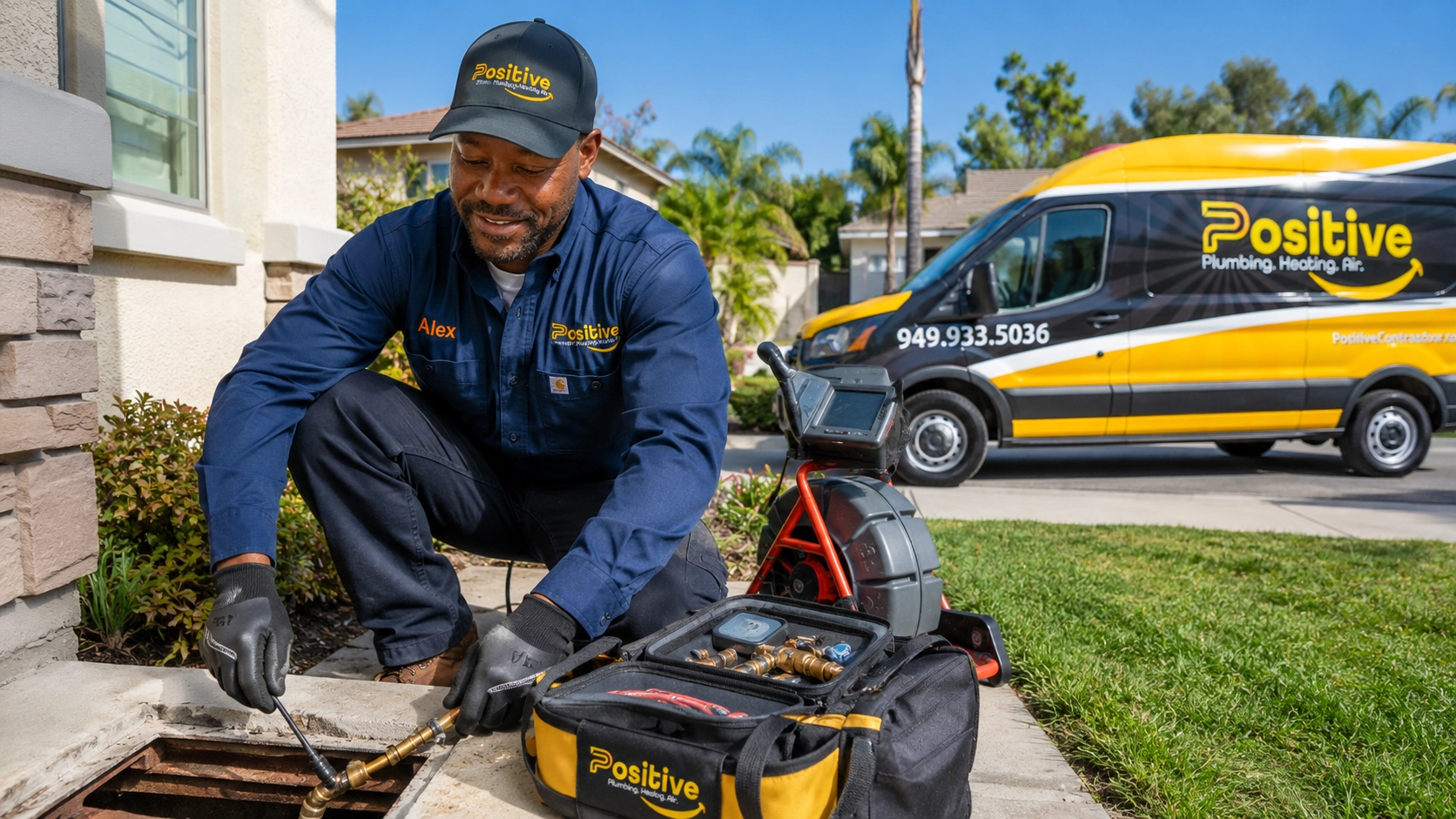

If your home has recurring leaks, low water pressure, rusty or discolored water, or old pipes that keep failing, you may be wondering how much repiping costs in Orange County. It is one of the bigger plumbing investments a homeowner can make, so naturally everyone wants a simple number. Sadly, plumbing does not behave like a drive-thru menu, because apparently houses insist on being different.
The cost to repipe a house depends on several factors, including the size of the home, the number of bathrooms, the existing pipe material, the new pipe material selected, accessibility, slab conditions, drywall access, and the overall complexity of the project.
This guide explains the main factors that affect repiping costs, how PEX and copper compare, when a whole-house repipe may make more sense than repeated repairs, and how Orange County homeowners can prepare for a professional repipe estimate.
Need a Repipe Estimate in Orange County?
Positive Plumbing can inspect your plumbing system, explain your options, and help you determine whether pipe repair, partial repiping, or whole-house repiping is the right solution for your home.
What Is Repiping?
Repiping is the process of replacing old, damaged, corroded, or failing water supply lines in a home. Instead of repairing one leak at a time, repiping addresses the larger plumbing system so the homeowner is not stuck dealing with the same problem over and over again.
In many residential projects, a repipe focuses on the hot and cold water supply lines that deliver water to sinks, showers, tubs, toilets, laundry areas, water heaters, hose bibs, and other fixtures. Depending on the home, the new system may be installed using PEX, copper, or another approved plumbing material.
Repiping is commonly recommended when a home has widespread pipe deterioration, repeated leaks, old galvanized pipes, failing copper pipes, previous slab leaks, or plumbing materials that are no longer reliable.
Average Repipe Cost in Orange County
There is no single fixed cost for repiping every home in Orange County. A small one-story home with easy attic access will usually be less expensive to repipe than a large two-story home with multiple bathrooms, difficult wall access, and a complex plumbing layout.
Instead of thinking about repiping as a flat-rate service, it is better to think of it as a custom plumbing project. The final price depends on labor, materials, routing, permits when required, drywall access, the number of fixtures, and the type of pipe selected.
| Repipe Cost Factor | How It Affects the Estimate |
|---|---|
| Home Size | Larger homes usually require more pipe, more labor, and more time. |
| Number of Bathrooms | More bathrooms and fixtures increase the number of plumbing connections. |
| Pipe Material | PEX and copper have different material and installation costs. |
| Accessibility | Easy access through attics, garages, or crawl spaces may reduce labor complexity. |
| Existing Pipe Condition | Severely deteriorated systems may require additional planning or repairs. |
| Drywall Access | Wall and ceiling openings may be needed to route and connect new piping. |
| Slab Foundation Conditions | Homes with under-slab pipe issues may require rerouting through walls or attic spaces. |
Because every home is different, the most accurate way to understand your repipe cost is through an in-home inspection from a licensed plumbing professional.
What Affects the Cost to Repipe a House?
1. The Size of the Home
Home size is one of the biggest factors in the cost of a repipe. Larger homes require longer pipe runs, more materials, more fittings, and more time to complete the installation.
A compact single-story home may have a simpler plumbing layout. A large two-story home may have bathrooms on different levels, longer water line runs, multiple plumbing zones, and more difficult access points.
2. The Number of Bathrooms and Plumbing Fixtures
Every bathroom, kitchen sink, laundry connection, water heater, outdoor hose bib, shower, tub, and toilet adds complexity to the project. More fixtures mean more connections, more routing, and more testing.
This is why two homes with the same square footage can have different repipe estimates. A 2,000-square-foot home with two bathrooms may cost less to repipe than a 2,000-square-foot home with four bathrooms, a wet bar, laundry room, and multiple outdoor water connections.
3. PEX vs. Copper Pipe Material
The material selected for the new plumbing system can significantly affect the total cost. PEX is often more affordable and faster to install, while copper is a traditional option with higher material and labor costs.
Both materials can be good options when installed correctly. The right choice depends on your home, your budget, your long-term goals, and the recommendation of your plumbing contractor.
4. Accessibility Inside the Home
Some homes allow easier access through attics, garages, closets, crawl spaces, or unfinished areas. Others require more drywall openings, careful routing, and extra labor to reach existing plumbing lines.
Accessibility matters because plumbing work is not only about the pipes themselves. The crew also needs to safely reach walls, ceilings, fixtures, water heater connections, and other parts of the system.
5. Existing Plumbing Material
Older Orange County homes may contain galvanized steel, aging copper, or other outdated materials. Galvanized pipes can corrode from the inside and restrict water flow. Older copper pipes may develop pinhole leaks. Polybutylene pipes, where present, are often considered problematic because of failure concerns.
The type and condition of the existing pipes can influence the scope of the project and the best replacement strategy.
6. Slab Leak History
If a home has experienced slab leaks, repiping may involve rerouting water lines away from the slab and through walls, ceilings, or attic spaces. This can be a practical option when under-slab piping has become unreliable.
Homes with repeated slab leaks may need more than another spot repair. They may need a broader solution that prevents future failures in the same aging system.
7. Drywall Patching and Finish Work
Repiping often requires access through walls or ceilings. Some contractors include basic drywall patching, while others coordinate drywall restoration separately. Paint matching and final finish work may also vary by project.
Before approving a repipe estimate, homeowners should ask what is included and what is not included. This prevents the delightful human ritual of surprise costs later.
PEX Repiping Cost vs. Copper Repiping Cost
One of the most common questions homeowners ask is whether they should choose PEX or copper for their repipe project. Both are common options, but they differ in cost, installation method, and performance characteristics.
| Pipe Material | Typical Cost Impact | Common Benefits | Common Considerations |
|---|---|---|---|
| PEX | Often more budget-friendly | Flexible, corrosion-resistant, efficient installation | Some homeowners still prefer traditional copper |
| Copper | Usually higher investment | Durable, traditional, long history of residential use | Higher material cost and more labor-intensive installation |
PEX Repiping
PEX is a flexible plastic piping material commonly used in modern residential plumbing. Because it can bend around obstacles and often requires fewer fittings, it may reduce labor time in many homes.
PEX is also resistant to corrosion, which makes it attractive for homeowners dealing with old metal pipes. It is commonly used for whole-house repiping, partial repiping, and water line replacement projects.
PEX may be a good option if you want a reliable system with efficient installation and a lower overall project cost compared with copper.
Learn more about PEX repiping services.
Copper Repiping
Copper has been used in residential plumbing for decades and remains a trusted option for many homeowners. It is strong, durable, and familiar to plumbers, inspectors, and homeowners throughout Southern California.
However, copper usually costs more than PEX because the material itself is more expensive and installation is often more labor intensive. Copper also requires careful cutting, fitting, and joining, which can increase labor time.
Copper may be the preferred option for homeowners who want a traditional metal piping system or who have specific property requirements.
Learn more about copper repiping services.
Repipe Cost by Home Size
Home size helps determine the general scope of a repiping project, but it should not be the only factor used to estimate cost. A smaller home with poor access may be more complicated than a larger home with easy access.
| Home Size | Typical Complexity | Why It Matters |
|---|---|---|
| Under 1,500 sq. ft. | Lower complexity | Usually fewer fixtures, shorter pipe runs, and less material. |
| 1,500–2,500 sq. ft. | Moderate complexity | Common range for many Orange County homes with multiple plumbing fixtures. |
| 2,500+ sq. ft. | Higher complexity | More bathrooms, longer pipe runs, more labor, and more project planning. |
Repipe Cost by Number of Bathrooms
The number of bathrooms is often one of the strongest cost drivers because bathrooms require multiple plumbing connections. Showers, tubs, sinks, and toilets all need to be considered when planning the new system.
| Bathroom Count | Cost Impact |
|---|---|
| 1 Bathroom | Generally lower complexity with fewer fixture connections. |
| 2 Bathrooms | Moderate complexity and common for many residential homes. |
| 3+ Bathrooms | Higher complexity due to more fixtures, water lines, and routing. |
Is Repiping Worth It?
Repiping may be worth it when the existing plumbing system has reached the point where repairs are no longer solving the real problem. If one pipe leaks because of an isolated issue, a repair may be enough. If multiple areas are leaking because the entire system is deteriorating, repiping may be the smarter long-term solution.
Repiping may be worth considering if your home has:
- Recurring pipe leaks
- Low water pressure throughout the home
- Rusty, brown, or discolored water
- Visible corrosion on exposed pipes
- Old galvanized pipes
- Multiple slab leaks
- Water damage from previous leaks
- Frequent emergency plumbing calls
- Plumbing repairs that keep adding up
The goal is not just to replace pipes. The goal is to reduce risk, improve reliability, and avoid paying for the same plumbing problem repeatedly.
Repipe vs. Pipe Repair: Which Is Better?
Pipe repair is usually less expensive upfront. That is why many homeowners choose it first. But repairs can become expensive when leaks keep returning in different areas of the home.
| Option | Best For | Long-Term Consideration |
|---|---|---|
| Pipe Repair | One isolated leak or damaged section | Lower upfront cost, but may not solve aging system-wide problems. |
| Partial Repipe | One problem area, bathroom, kitchen, or section of the home | Can solve localized issues without replacing the entire system. |
| Whole-House Repipe | Widespread leaks, corrosion, or old plumbing | Higher upfront investment, but often better for long-term reliability. |
If your home has only one small leak, a repair may be enough. If your plumber is visiting often enough to deserve a parking spot, it may be time to discuss repiping.
Learn more about partial repiping and whole-house repiping.
What Is Included in a Whole-House Repipe?
The exact scope of a whole-house repipe depends on the property, but most projects involve replacing the main hot and cold water supply lines serving the home’s fixtures.
A typical repipe project may include:
- Inspection of the current plumbing system
- Planning the new pipe routes
- Opening necessary wall or ceiling access points
- Installing new PEX or copper water lines
- Connecting fixtures and plumbing appliances
- Connecting to the water heater as needed
- Pressure testing the new system
- Checking for leaks
- Restoring water service
- Coordinating drywall patching or finish work when included
Before hiring a contractor, ask exactly what the estimate includes so you can compare proposals accurately.
How Long Does a Repipe Take?
Many residential repiping projects can be completed within a few days, depending on the size and complexity of the home. Larger homes, difficult access, slab-related rerouting, or additional repairs may require more time.
Your plumber should explain the expected schedule before work begins, including when water may be temporarily shut off and which areas of the home need access.
Can You Stay in Your Home During a Repipe?
In many cases, homeowners can remain in the home during a repipe project. There may be periods when water service is temporarily unavailable, but the contractor should communicate the schedule clearly.
If you work from home, have young children, pets, or medical needs that require consistent water access, mention this during the estimate so the project can be planned accordingly.
Will Repiping Improve Water Pressure?
Repiping may improve water pressure if the current pipes are corroded, restricted, undersized, or filled with mineral buildup. Galvanized pipes, in particular, can corrode internally and reduce water flow over time.
If your whole home has weak water pressure, the plumbing system may be part of the problem. A professional inspection can help determine whether repiping would improve water flow.
Can Repiping Improve Water Quality?
Repiping may help if rusty, brown, or discolored water is caused by old, corroded pipes. Replacing deteriorated pipes can reduce the risk of corrosion-related discoloration and improve confidence in the home’s plumbing system.
However, water quality concerns can also come from other sources, including municipal supply conditions, water heaters, fixtures, or filtration issues. A plumber can help identify whether the pipes are the likely cause.
Does Homeowners Insurance Cover Repiping?
Homeowners insurance may cover sudden and accidental water damage from a covered plumbing event, but it does not always cover the cost of replacing old or deteriorated pipes. Insurance policies vary, and coverage depends on the cause of the damage, the policy language, and the insurance company’s findings.
If you have water damage or an active claim, speak with your insurance provider before starting work. Do not assume the repipe itself is covered just because a leak caused damage.
Why Orange County Homes May Need Repiping
Orange County has many homes built decades ago. Depending on the city, neighborhood, and construction year, homes may still have older plumbing materials that are now more prone to leaks, corrosion, and pressure issues.
Homeowners in Irvine, Anaheim, Fullerton, Orange, Tustin, Costa Mesa, Huntington Beach, Newport Beach, Mission Viejo, Lake Forest, Garden Grove, Fountain Valley, Santa Ana, and Yorba Linda may experience plumbing issues related to aging pipes or previous slab leaks.
Older homes are not automatically bad candidates for repair, but repeated pipe failures are a strong signal that the larger system should be evaluated.
Signs Your Orange County Home May Need Repiping
Not every plumbing issue requires a full repipe. But certain warning signs should not be ignored.
- You have had more than one leak in recent years.
- Your water pressure has dropped throughout the home.
- Water appears rusty, yellow, brown, or cloudy.
- You see corrosion on exposed pipes.
- Your home has galvanized pipes.
- Your home has a history of slab leaks.
- You hear unusual pipe noises.
- Your plumber keeps repairing different sections of the system.
- You are planning to remodel and want to update the plumbing first.
If several of these signs apply to your home, scheduling a repipe inspection is a reasonable next step.
How to Get an Accurate Repipe Estimate
Online articles can explain the factors, but they cannot inspect your walls, attic, pipe routes, water pressure, or existing plumbing materials. A real estimate requires a real evaluation. Annoying, yes. Necessary, also yes.
Before requesting an estimate, gather the following information if possible:
- The age of your home
- The number of bathrooms
- Any history of pipe leaks
- Any history of slab leaks
- Whether water pressure has changed
- Whether water is rusty or discolored
- Any previous plumbing repairs
- The type of existing pipe material, if known
- Whether you prefer PEX, copper, or need guidance
The plumber should explain the recommended material, project timeline, access needs, warranty details, and what is included in the estimate.
Questions to Ask Before Hiring a Repipe Contractor
Before choosing a contractor, ask clear questions so you know exactly what you are paying for.
- Are you licensed and insured?
- Do you specialize in residential repiping?
- Do you recommend PEX, copper, or another material for my home?
- What is included in the estimate?
- Is drywall patching included?
- Is painting included or separate?
- How long will the project take?
- Will I have water service during the project?
- What warranty is included?
- Do you offer financing?
- Will permits be needed?
A good contractor should answer these questions clearly instead of making you decode vague sales language like it is an ancient scroll.
Frequently Asked Questions About Repiping Costs
How much does it cost to repipe a house in Orange County?
The cost depends on the size of the home, number of bathrooms, pipe material, access conditions, and overall plumbing complexity. The most accurate way to determine cost is through an in-home inspection.
Is PEX cheaper than copper for repiping?
PEX is often more affordable than copper because the material usually costs less and installation can be more efficient. Copper generally requires a higher investment because of material and labor costs.
Is a whole-house repipe better than repairing one pipe?
If the problem is isolated, a repair may be enough. If leaks are recurring or the plumbing system is aging throughout the home, a whole-house repipe may be the better long-term solution.
How long does a whole-house repipe last?
The lifespan depends on the material used, water conditions, installation quality, and maintenance. Both PEX and copper can provide long-term performance when installed correctly.
Can repiping help with slab leaks?
Repiping or rerouting water lines may help reduce the risk of future slab leaks when the existing under-slab piping is failing. A plumber can inspect the system and recommend whether rerouting or repiping makes sense.
Will repiping increase home value?
Updated plumbing can be attractive to buyers because it reduces concern about future leaks and aging pipes. While value depends on the market and property, modern plumbing is generally a positive feature for older homes.
Can I finance a repipe project?
Many plumbing companies offer financing options for larger projects such as whole-house repiping. Ask your contractor what financing options are available before approving the work.
Do I need to repipe if I have galvanized pipes?
Galvanized pipes can corrode from the inside, causing low water pressure, rusty water, and leaks. If your home still has galvanized pipes and is experiencing these issues, replacement may be recommended.
What is the difference between partial repiping and whole-house repiping?
Partial repiping replaces one section of the plumbing system, such as a bathroom, kitchen, or damaged line. Whole-house repiping replaces the water supply system throughout the home.
Should I choose PEX or copper?
The best option depends on your home, budget, preferences, and plumbing layout. PEX is often more cost-effective and easier to install, while copper is a traditional material with a long history of residential use.
Schedule a Repipe Estimate in Orange County
If your home has recurring leaks, aging pipes, low water pressure, rusty water, or previous slab leak issues, it may be time to consider repiping.
Positive Plumbing can evaluate your plumbing system and explain whether pipe repair, partial repiping, or whole-house repiping is the best option for your home.